


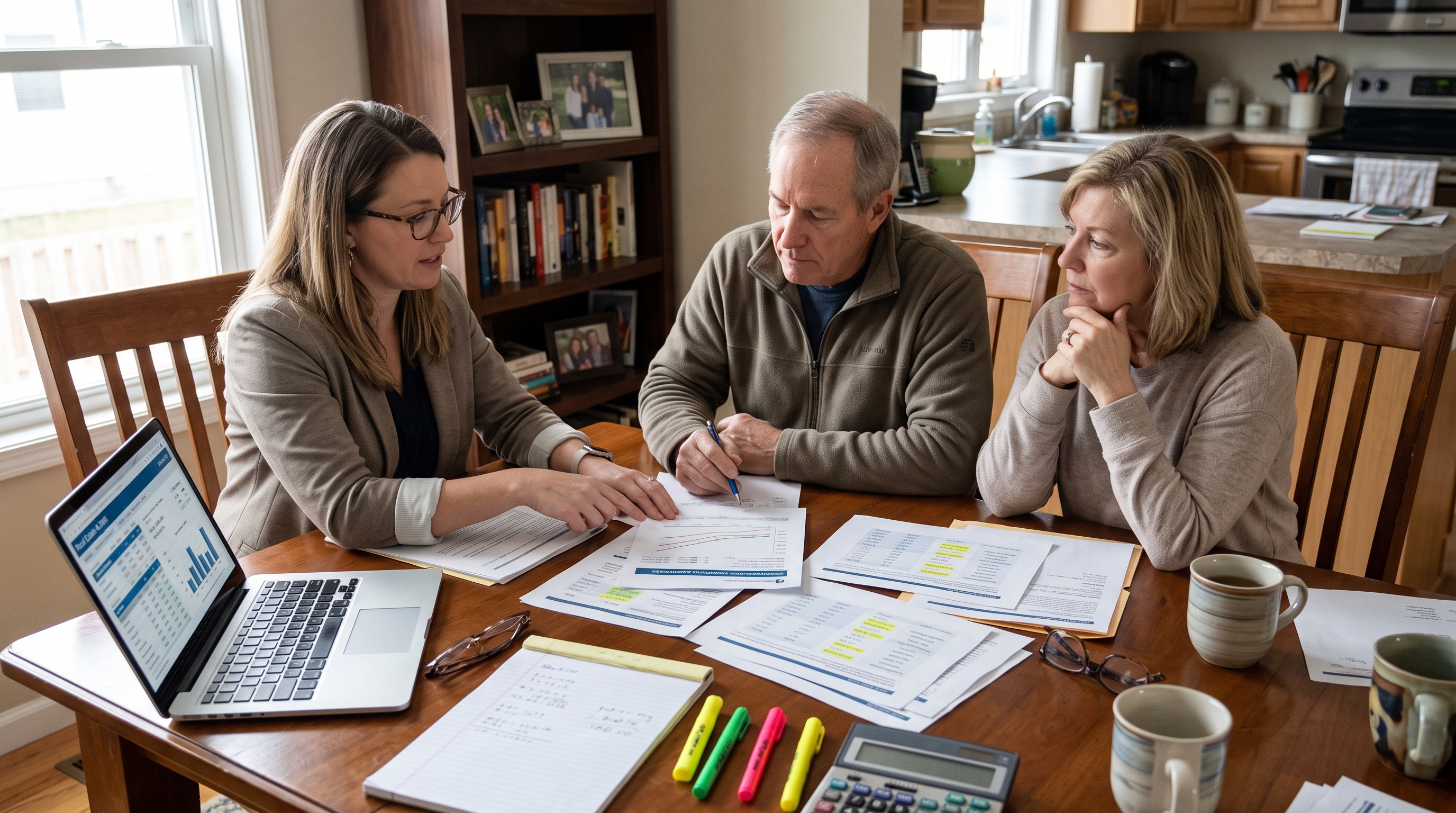
Many sellers quietly ask themselves whether the highest estimate is the best price or just the most flattering number. It's a fair question, and the answer matters more than most people realize. Seeing a big Zillow or Redfin estimate on your screen can feel validating, and it's completely natural to want that number to be true. But the best list price is not the highest possible number. It's the one most likely to attract buyers, support financing, and lead to a strong final result.
This article breaks down how pricing really works, from comparable sales and comparative market analyses to property condition and current market conditions. By the end, you'll feel more confident, less overwhelmed, and better prepared to price your home correctly from day one.
The Smartest List Price Is the One Buyers Will Act On
Buyers respond to value, not to a seller's favorite estimate. That's the most practical truth in real estate pricing, and it shapes everything else. When a home is priced too high, early showings drop off, momentum weakens, and days on market start climbing. Once a listing sits too long, buyers begin to wonder what's wrong with it, even if the answer is simply that it was overpriced.
The first days on market carry serious weight. Buyers and their agents watch for fresh listings, and that initial window is when your home gets the most organic attention. A well-priced home entering the market can generate multiple showings quickly, which gives your agent something to work with. When several buyers are genuinely interested at the same time, your agent can create a competitive environment where buyers aren't just offering asking price, they're offering better terms, fewer contingencies, and sometimes more money.
Pricing realistically is not leaving money on the table. It's actually the move that tends to produce stronger outcomes. Homes that are priced to attract real demand often end up selling close to or above list price, while overpriced homes that sit and require reductions tend to sell for less than they would have with a sharper starting price. The strategy behind the number matters far more than the number itself.
Your listing agent plays a key role in this process. A good agent doesn't just suggest a price and walk away. They use disciplined pricing to generate interest, then leverage that interest to create a situation where buyers feel they need to act. That kind of positioning is only possible when the price makes sense to the market from the start.
Sellers who understand this going in are far better equipped to make confident decisions. You don't have to chase the highest estimate to get a great result. You just need a price that buyers will actually respond to, and an agent who knows how to turn that response into competing offers.
Why the Highest Online Estimate Can Point You in the Wrong Direction
Zillow and Redfin estimates are automated outputs, not in-person valuations or appraisals. Both platforms use algorithms that pull from public records, tax data, and recent sales activity, but they can't walk through your home, notice the updated kitchen, or spot the deferred maintenance in the garage. Even Zillow itself describes the Zestimate as a starting point for research, not a substitute for a professional valuation.
Part of the confusion comes from how different these estimates can be from one platform to the next. Zillow and Redfin use different algorithms and data sources, update on different timelines, and rely on public records that aren't always current. A recent renovation that hasn't been captured in county records, for example, may not factor into the estimate at all. That gap between what the algorithm sees and what's actually inside your home can translate into a meaningful difference in the number it spits out.
On-market estimates tend to be more accurate than off-market ones because there's more recent sales data available in active neighborhoods. But even then, the estimate can miss details that significantly affect value, things like a finished basement, a remodeled primary bath, or a backyard that backs up to a busy road. These are the kinds of factors that shift what a buyer is willing to pay, and no algorithm captures them reliably.
That doesn't mean online estimates are useless. Checking a few of them gives you a general sense of where your home might fall within the broader market. The problem comes when sellers treat the highest estimate as the number to list at, rather than as one rough data point among many. Using an estimate that way is a bit like using a weather app to decide whether to cancel a flight. It gives you some information, but it's not the right tool for that level of decision.
The estimate that matters most is the one grounded in what buyers and lenders have actually supported in your specific market, for homes that genuinely compare to yours. That's a different kind of analysis entirely, and it requires more than an algorithm can provide.
Recent Sold Comps Tell You More Than Hopeful Asking Prices
Comparable sales, or comps, are similar homes nearby that sold recently under real market conditions. They're the clearest signal you have of what buyers are actually willing to pay, because they reflect completed transactions rather than what a seller hoped to get.
This distinction matters more than most sellers expect. Active listings show you what other sellers are asking, but they don't tell you whether buyers agreed. A home can sit on the market for months at an inflated price without ever selling. Closed sales, on the other hand, represent deals where a buyer made an offer, a lender approved the financing, and both sides agreed on a number. That's the data worth paying attention to.
Not every nearby sale qualifies as a useful comp, though. What makes a comp truly relevant comes down to a few specific factors:
- Size and square footage, since price per square foot varies significantly between smaller and larger homes
- Age and construction style, because buyers often compare homes within similar eras of building
- Lot size and features, especially in markets where outdoor space carries real value
- Location within the neighborhood, since a cul-de-sac home, a corner lot, and a home backing a highway can all price very differently even on the same street
- Timing, because a sale from 18 months ago may not reflect where the market is today
One of the most common mistakes sellers make is comparing their home to the nicest or highest-priced listing in the area without honestly assessing whether the comparison holds up. If that listing has a fully renovated kitchen, a three-car garage, and a pool, and your home doesn't, it's not a fair comp, no matter how close it is geographically.
Pending sales also carry useful information. They show where buyer demand is right now, even before those deals officially close. Paired with an honest look at active competition, pending sales help paint a current picture of what buyers in your market are willing to support.
What a Good CMA Looks at That an App Cannot Fully See
A comparative market analysis, or CMA, is the tool agents use to recommend a pricing range for your home. It's not a single number pulled from a database. It's an interpretation of market data that accounts for your home's specific characteristics and how it fits within current competition.
A well-prepared CMA draws from several sources at once. An agent reviews recently sold homes that compare to yours, looks at active listings to understand what your home will compete against, checks pending sales to gauge current demand, and studies neighborhood trends to see whether prices have been moving up, holding steady, or softening. From there, they make adjustments for differences between your home and the comps, things like an extra bathroom, a newer roof, or a smaller lot.
That adjustment process is where local expertise makes a real difference. An algorithm averages nearby sales. An experienced agent interprets them. They understand why one home sold $30,000 above another with the same bedroom count, and they can apply that reasoning to your specific situation. That kind of judgment isn't something an app can replicate, because it requires actually knowing the neighborhood, understanding buyer behavior in that area, and recognizing which features are driving demand right now.
A CMA is also about positioning, not just pricing. The goal isn't to find the mathematical midpoint of nearby sales. It's to place your home at a price point that makes it competitive within the current pool of active listings while still reflecting its true value. A home priced just below a common search threshold, for example, will appear in more buyer searches than one priced just above it. That's the kind of strategic thinking a CMA supports.
Most sellers still rely on an agent when making final pricing decisions, and this is exactly why. The data itself is accessible to anyone, but knowing what to do with it, and how to use it to your advantage, takes experience and local knowledge that goes well beyond what any automated tool can offer.
The Details That Can Raise or Lower Your Value Fast
Two homes with the same bedroom count and square footage can price very differently, and the reasons usually come down to details that don't show up cleanly in a database. Condition, updates, layout, curb appeal, lot features, and exact location within the neighborhood all shape what a buyer is willing to pay, sometimes by tens of thousands of dollars.
Online estimates often miss these factors entirely. An outdated kitchen, deferred maintenance, a roof that's nearing the end of its life, or an awkward floor plan can all reduce what buyers are willing to offer, but none of those things show up in public records. The same goes for positive features. A recently renovated primary bathroom, a finished basement, or a well-designed outdoor living space can meaningfully increase value in ways an algorithm won't fully capture.
Hyperlocal factors carry just as much weight. Being in a top-rated school zone, sitting on a quiet cul-de-sac, having a view, or being within walking distance of shops and restaurants can all add real value. On the flip side, backing up to a busy road, sitting in a flood zone, or being near a commercial property can reduce what buyers are willing to pay, regardless of what the square footage suggests.
Buyers experience homes in person, and their decisions are shaped by what they see, hear, and feel when they walk through. A home that smells musty, has peeling paint at the entry, or feels dark and cramped will leave a different impression than one that's clean, well-lit, and move-in ready, even if the two homes are technically similar on paper. Pricing needs to reflect that reality.
Sellers who assess their home honestly before listing are in a much stronger position. Knowing where your home stands relative to the competition, including its weaknesses, lets you price with clarity rather than optimism. That kind of self-awareness is what separates sellers who price well from the start from those who end up chasing the market with reductions later.
Your Price Should Match Your Market and Your Timeline
Pricing doesn't happen in a vacuum. What works in a fast-moving seller's market won't necessarily work when inventory is rising and buyers have more choices. Your personal timeline adds another layer to the equation, because the right price for someone who needs to move in 60 days looks different from the right price for someone who can afford to wait.
Inventory has risen in many markets, and price growth has become more moderate compared to the sharp increases seen in recent years. In that kind of environment, buyers have more options, which means overpriced homes get passed over faster. A balanced or shifting market punishes overpricing more quickly than a hot one does, because buyers simply move on to the next listing rather than competing for yours.
Your goals matter just as much as the market conditions. A seller who wants a fast, clean transaction should price to generate immediate interest, even if that means leaving a small amount of potential upside on the table. A seller with a unique property and few direct comps may have more room to test a slightly higher price, though that strategy still carries risk if the home sits too long and loses momentum.
The question worth asking before you list isn't just "what could my home sell for?" It's "what price best supports my timeline and my net goals?" Those two things don't always point to the same number, and being clear about your priorities helps you and your agent make a more deliberate decision.
Studying active competition before you list is one of the most practical steps you can take. Look at what's currently on the market in your price range and ask yourself honestly where your home fits. If buyers searching in your neighborhood are comparing your home to three others at the same price point, your home needs to hold up in that comparison, not just in isolation.
A Simple Pricing Plan Sellers Can Use Before They List
Getting your pricing strategy right before you list starts with gathering the right information, not just the most encouraging information. Pull estimates from several platforms like Zillow and Redfin, but treat them as a rough range rather than a target. If the estimates vary widely, that's a signal your home may be harder to price from data alone, which makes a professional evaluation even more important.
From there, request a CMA from two or three local agents. Ask each one to walk you through the sold comps they're using and explain why those specific sales are relevant to your home. Pay attention to which agent is making thoughtful adjustments for differences between your home and the comps, rather than just presenting a high number to win your listing. The agent who explains their reasoning clearly is usually the one you can trust with your pricing strategy.
Before those conversations, do an honest internal audit of your home. Think about it the way a buyer would:
- What updates have been made, and how recent are they?
- Are there any deferred maintenance issues that a buyer or inspector would flag?
- How does the layout, condition, and curb appeal compare to other homes in the same price range?
- Are there any hyperlocal factors, positive or negative, that could influence buyer interest?
That kind of self-assessment helps you have a more grounded conversation with your agent and makes it easier to evaluate their pricing recommendation honestly.
Once you're on the market, watch the first two weeks closely. Showing activity and buyer feedback in that window tell you a great deal about whether your price is landing correctly. If traffic is low and feedback points to price as the concern, adjusting quickly is far better than waiting and hoping the market catches up. A timely price correction preserves momentum. A delayed one often means starting over with a listing that buyers have already scrolled past.
Conclusion
The highest estimate is not always the smartest list price, and understanding that distinction is what separates sellers who price well from those who spend weeks wondering why their home isn't moving. Strong pricing starts with real market evidence, particularly recent comparable sales and a thoughtful CMA prepared by someone who knows your local market.
Online estimates from platforms like Zillow and Redfin can give you useful context, but they can't replace an in-person evaluation or the judgment of an experienced local agent. Condition, location, competition, and timing all shape what buyers will actually pay, and none of those factors translate perfectly into an algorithm.
Pricing your home well from the start puts you in a position to attract stronger offers, avoid wasted time on the market, and move forward with a clearer sense of what to expect. You are fully capable of making a smart pricing decision. You just need the right data, an honest look at your home, and an agent who can turn all of that into a strategy that works.
Check out this article next